Rāma Navamī – 27. March 2026 – The appearance day of Lord Rāma
Rāma Navamī is the 9th day of the Sukla Pakṣa (waxing phase of the Moon or bright fortnight) in the month of Caitra (Mar- Apr). In the year 2026 Rām Navamī will be observed on Friday, March 27.
According to Vedic tradition, Lord Rama appeared on the ninth day of the waxing phase of the moon in the month of Caitra (March-April), around midday. As stated in the vedic Lunar Calendar (Panchang), the Navamī Tithi dominates on the midday (Madhyama muhūrta) since it is said, that this was the time when Lord Rāma was literally born in Ayodhyā. Therefore, the main pūjā, singing of mantras, and Ārati is fulfilled at this midday period by the believers.
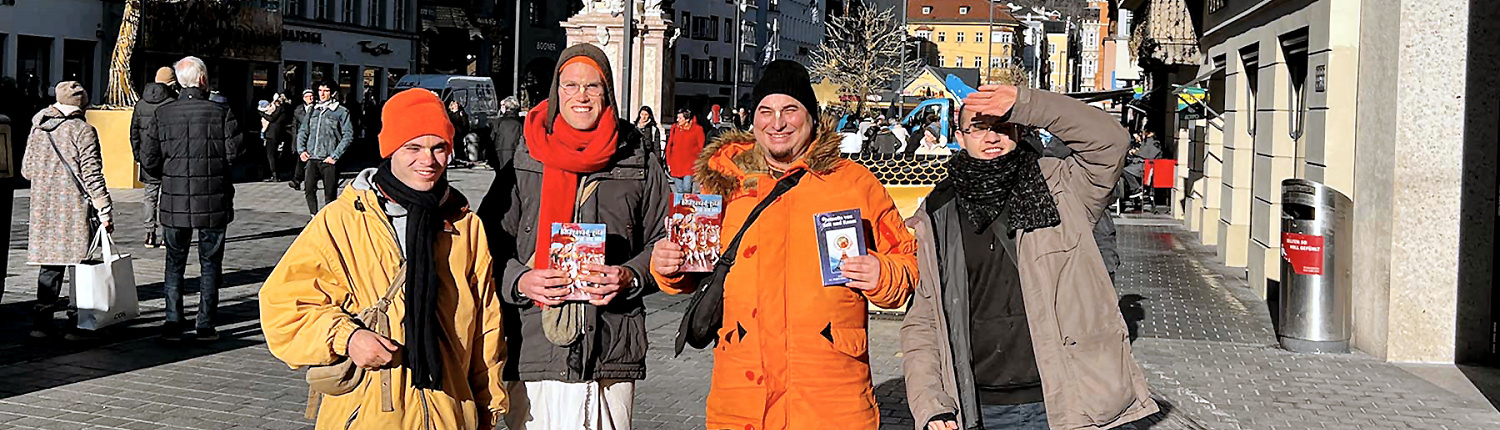
On the actual day of Śrī Rāmacandra’s appearance, March 27, 2026, the devotees of the Mainhausen Temple are out on book distribution. In the evening (starting at 6:00 p.m.), there will be a small program with prasādam, kīrtan, and a reading about the glorious deeds and pastimes of Lord Rāmacandra
The main celebrations will take place on the following Sunday, March 29, 2026. Everyone is warmly invited to both events.
INVITATION
On Sunday, March 29, 2026, we will celebrate Rāma Navamī at our temple in Mainhausen. The festivities start at 4 p.m. Everyone is warmly invited. We look forward to seeing you!
Program: Sunday, March 29, 2026, starting at 3:00 PM Kīrtana: Group chanting of sacred mantras Lecture: Lord Rāmacandra’s deeds and the significance of His appearance Prasādam: Festive vegetarian Prasādam meal
IHKM – Friedhofstr. 3, 63533 Mainhausen/Mainflingen, Germany
We celebrate the appearance day of Śrī Rāmacandra with Abhiṣeka (bathing ceremony of the deity) and Ārati (light ceremony). In addition to ecstatic mantra chanting (kīrtan) and a delicious festive meal (prasādam), there will be a reading about the glorious deeds of Śrī Rāma.
The Significance of Lord Rāma’s Appearance
When the Lord appears as Śrī Kṛṣṇa, He descends in His original form as the Enjoyer and wins the hearts of His devotees through His sweet pastimes (līlās). However, many of Kṛṣṇa’s pastimes are confusing to ordinary people because He acts in ways that ordinary people should not.
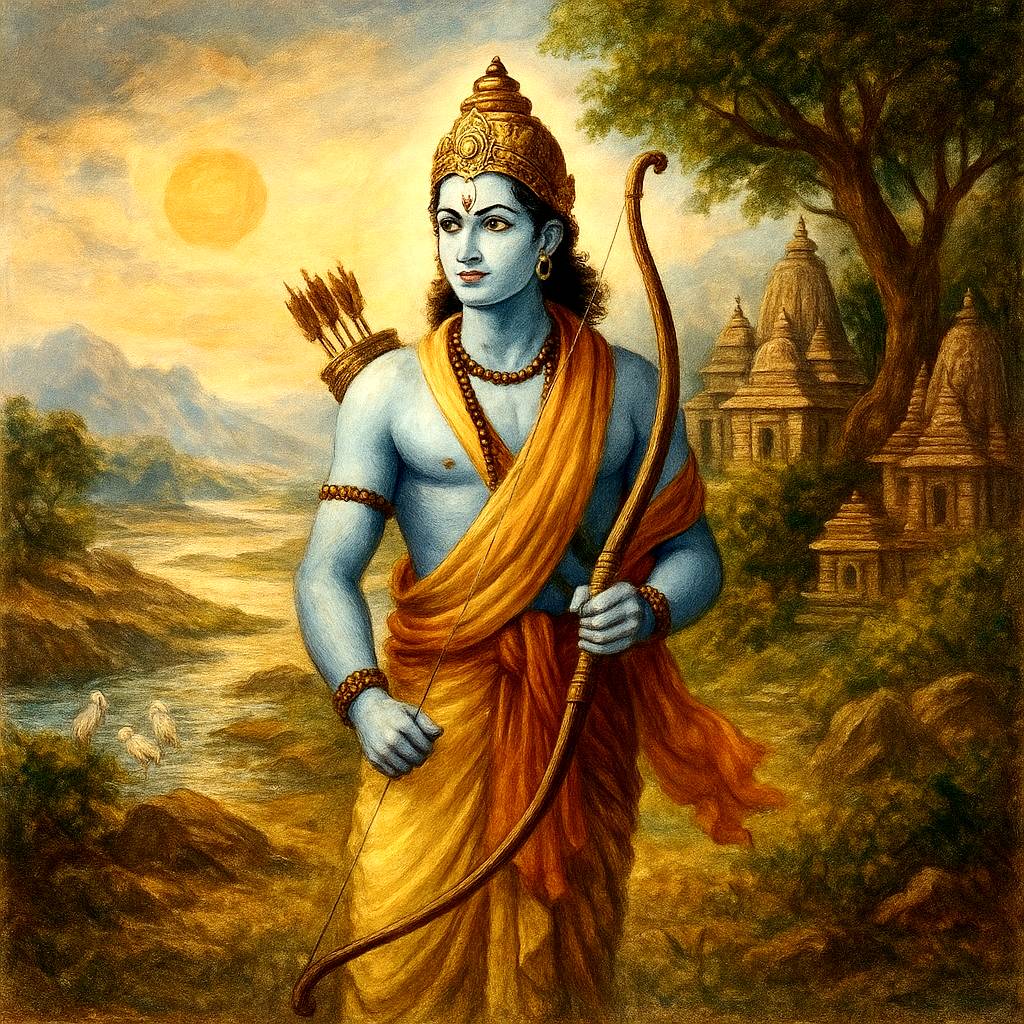
Lord Rāmacandra is Śrī Kṛṣṇa Himself. He appears in the form of Rāma to convey to us the ideal role model of the perfect king, husband, son, friend, and Lord.
Without complaint, Rāma obeyed His father’s instruction to renounce the throne on the eve of His coronation and go into exile in the forest for fourteen years. He always fulfilled His duty in every respect. Rāma fully manifests all the opulences of the Lord. He possesses boundless strength, wealth, fame, beauty, knowledge, and renunciation, and He revealed all of this in His pastimes. His renunciation was so great that, although He was the most beloved crown prince of Ayodhyā and the ideal future king, He gave up everything without hesitation to lead a life of austerity in the forest.
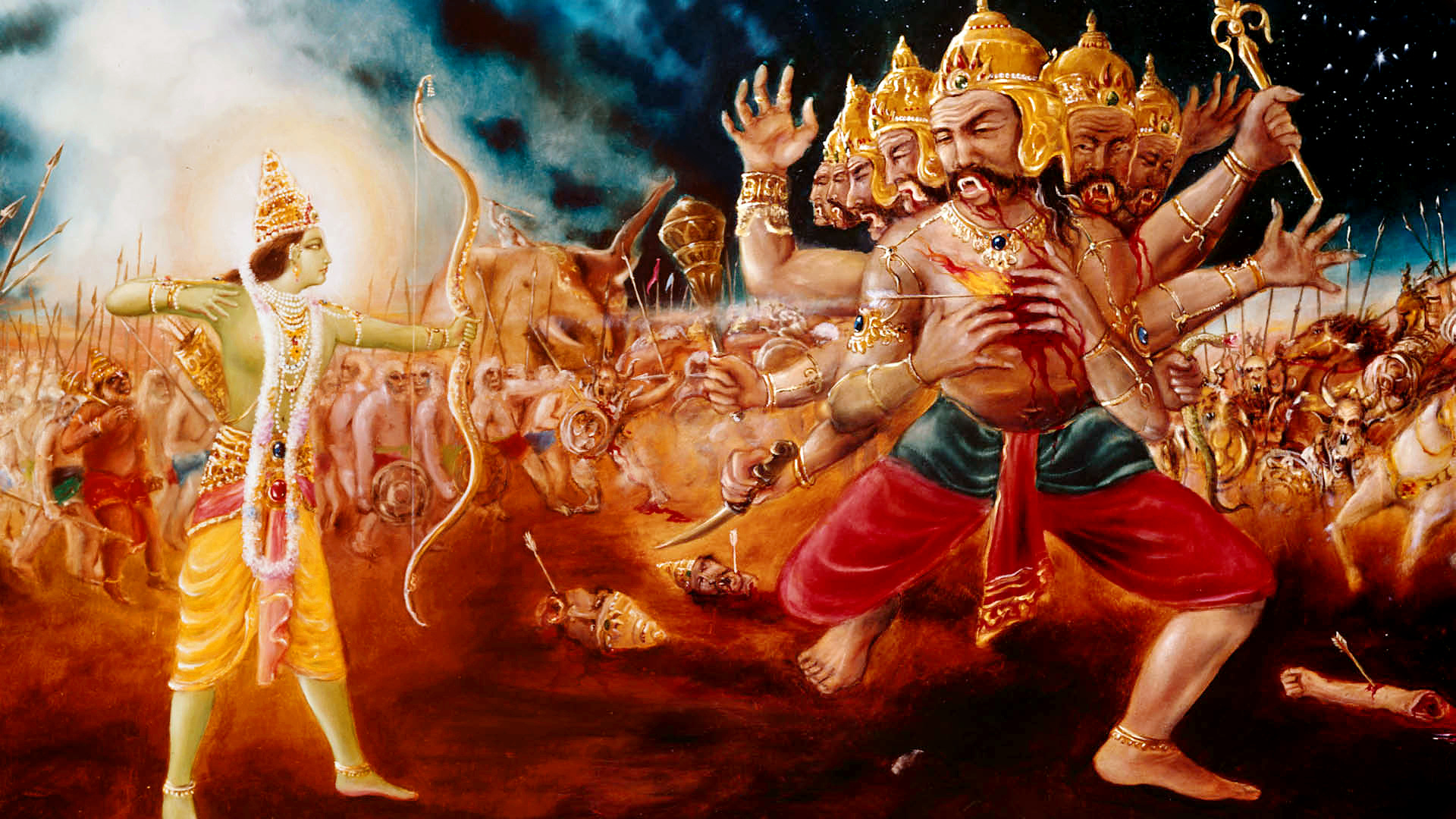
Although Lord Rāma is completely renounced, another important lesson from His pastimes is what happens when someone other than the Lord attempts to enjoy the Lord’s energy. Rāma was completely renounced, yet when the demon Rāvaṇa abducted Rāma’s wife Sītā to enjoy her, Rāmacandra completely destroyed him.
A. C. Bhaktivedanta Swami Prabhupāda explains:
“Sita is Lakṣmījī, the goddess of fortune, yet she is never meant to be enjoyed by any living entity. She is meant to be worshiped by the living entity together with her husband, Śrī Rāmacandra. A demoniac person like Rāvaṇa does not understand this great truth; on the contrary, he wants to snatch Sītādevī from Rāma’s care and thereby brings great suffering upon himself. Materialists who strive for wealth and material prosperity can learn from the Rāmāyaṇa that the policy of exploiting the Lord’s nature without acknowledging His sovereignty is Rāvaṇa’s policy. Rāvaṇa was materially very advanced, so much so that he transformed his kingdom of Laṅkā into pure gold, that is, into perfect material wealth. But because he did not acknowledge the supremacy of Śrī Rāmacandra and defied Him by abducting His wife Sītā, Rāvaṇa was killed, and all his wealth and power were destroyed.” (Rama-Navami Lecture – March 27, 1969, Hawaii)
Thus, the pastimes performed by Lord Rāma teach us that true success can be attained only through service to the Lord and never by attempting to enjoy the Lord’s energy oneself.
“Obeisances unto Lord Rāma, the benevolent and auspicious one, who is pleasing to the mind and charming to the eyes, illuminating the darkness of ignorance, just as the moon illuminates the night sky, the best among the Raghu dynasty, the husband of Sītā, and the Lord and protector of the world.”
Rām Navamī marks the divine appearance of Lord Rāma, the seventh incarnation of Lord Viṣṇu, who is regarded as the embodiment of Dharma, righteousness, and divine grace. He descended into this world during Tretā-yuga, more than two million years ago, to illuminate the path of Dharma (righteousness) and set the ultimate example for humanity.
During Lord Rama’s reign, all the citizens were happy, religious and their necessities of life were provided. He was a virtuous, charitable and dutiful King. He is particularly known for his victorious battle with the ten-headed demon Rāvaṇa, the evil King of Laṅkā thereby freeing his wife Sītā from the demon’s captivity. Through his life, he exemplified heroism, morality and good governance.
During His activities while on Earth, Lord Rāma demonstrated high moral values and acted as the perfect son, student, brother, husband and King. His extraordinary adventure is marvellously depicted in the famous epic The Rāmāyaṇa.
For devotees world wide, Rām Navamī remains a deeply spiritual day filled with prayer and devotion, glorifying Lord Rāma’s divine victory of righteousness and light over ignorance across all over the world. Ram Navamī signifies the triumph of good over evil, inspiring devotees to walk the path of truth, duty, and selfless devotion. It is a day of divine reflection, spiritual awakening, and reaffirming one’s faith in the eternal values of Sanātana Dharma.
The story of Śrī Rāma Navamī is described in the Vālmīki Rāmāyaṇa, specifically in the Bala Kāṇḍa, which narrates the birth of Lord Rāma in Ayodhyā. King Daśaratha, who had no children, performed a special ritual called the Putrakamesti Yajña with the guidance of sage Ṛṣyaśṛṅga. From the sacrificial fire, a divine being appeared and offered a sacred sweet dish called pāyasam to the king, who distributed it among his queens, named Kauśalyā, Kaikeyī, and Sumitra. Lord Rāma was born to Queen Kauśalyā on the ninth day (Navamī) of the bright half of the month of Caitra, at midday. Even today, Rām Navamī is celebrated at midday, believed to be the exact hour of Lord Rāma’s birth, rather than at sunrise or sunset.
This website uses cookies — You can find more information about this and your rights as a user in our data-protection. Click “I agree” to accept cookies and be able to visit our website directly. About "Settings" You can activate or deactivate individual cookies.
Wir können Cookies anfordern, die auf Ihrem Gerät eingestellt werden. Wir verwenden Cookies, um uns mitzuteilen, wenn Sie unsere Websites besuchen, wie Sie mit uns interagieren, Ihre Nutzererfahrung verbessern und Ihre Beziehung zu unserer Website anpassen.
Klicken Sie auf die verschiedenen Kategorienüberschriften, um mehr zu erfahren. Sie können auch einige Ihrer Einstellungen ändern. Beachten Sie, dass das Blockieren einiger Arten von Cookies Auswirkungen auf Ihre Erfahrung auf unseren Websites und auf die Dienste haben kann, die wir anbieten können.
Notwendige Website Cookies
Diese Cookies sind unbedingt erforderlich, um Ihnen die auf unserer Webseite verfügbaren Dienste und Funktionen zur Verfügung zu stellen.
Da diese Cookies für die auf unserer Webseite verfügbaren Dienste und Funktionen unbedingt erforderlich sind, hat die Ablehnung Auswirkungen auf die Funktionsweise unserer Webseite. Sie können Cookies jederzeit blockieren oder löschen, indem Sie Ihre Browsereinstellungen ändern und das Blockieren aller Cookies auf dieser Webseite erzwingen. Sie werden jedoch immer aufgefordert, Cookies zu akzeptieren / abzulehnen, wenn Sie unsere Website erneut besuchen.
Wir respektieren es voll und ganz, wenn Sie Cookies ablehnen möchten. Um zu vermeiden, dass Sie immer wieder nach Cookies gefragt werden, erlauben Sie uns bitte, einen Cookie für Ihre Einstellungen zu speichern. Sie können sich jederzeit abmelden oder andere Cookies zulassen, um unsere Dienste vollumfänglich nutzen zu können. Wenn Sie Cookies ablehnen, werden alle gesetzten Cookies auf unserer Domain entfernt.
Wir stellen Ihnen eine Liste der von Ihrem Computer auf unserer Domain gespeicherten Cookies zur Verfügung. Aus Sicherheitsgründen können wie Ihnen keine Cookies anzeigen, die von anderen Domains gespeichert werden. Diese können Sie in den Sicherheitseinstellungen Ihres Browsers einsehen.
Google Analytics Cookies
Diese Cookies sammeln Informationen, die uns - teilweise zusammengefasst - dabei helfen zu verstehen, wie unsere Webseite genutzt wird und wie effektiv unsere Marketing-Maßnahmen sind. Auch können wir mit den Erkenntnissen aus diesen Cookies unsere Anwendungen anpassen, um Ihre Nutzererfahrung auf unserer Webseite zu verbessern.
Wenn Sie nicht wollen, dass wir Ihren Besuch auf unserer Seite verfolgen können Sie dies hier in Ihrem Browser blockieren:
Andere externe Dienste
Wir nutzen auch verschiedene externe Dienste wie Google Webfonts, Google Maps und externe Videoanbieter. Da diese Anbieter möglicherweise personenbezogene Daten von Ihnen speichern, können Sie diese hier deaktivieren. Bitte beachten Sie, dass eine Deaktivierung dieser Cookies die Funktionalität und das Aussehen unserer Webseite erheblich beeinträchtigen kann. Die Änderungen werden nach einem Neuladen der Seite wirksam.
Google Webfont Einstellungen:
Google Maps Einstellungen:
Google reCaptcha Einstellungen:
Vimeo und YouTube Einstellungen:
Datenschutzrichtlinie
Sie können unsere Cookies und Datenschutzeinstellungen im Detail in unseren Datenschutzrichtlinie nachlesen.


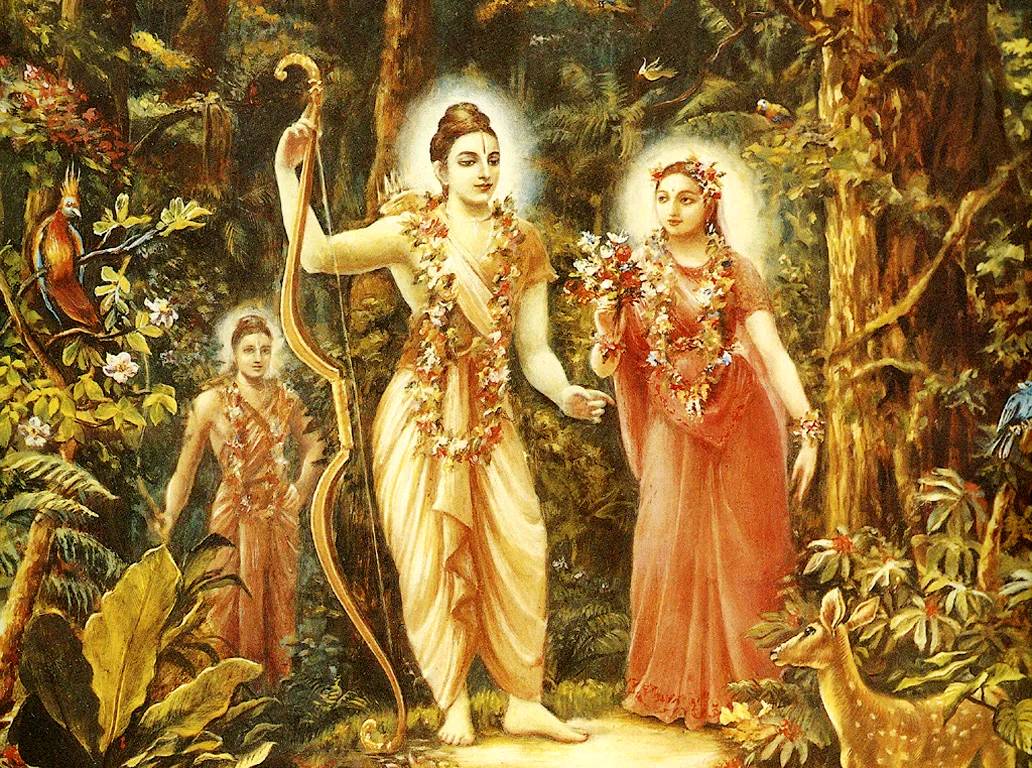
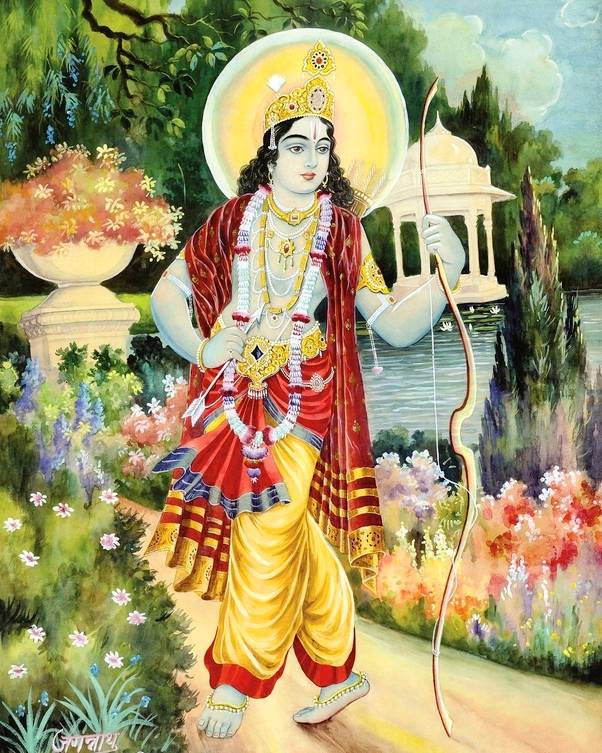
 The story of Śrī Rāma Navamī is described in the Vālmīki Rāmāyaṇa, specifically in the Bala Kāṇḍa, which narrates the birth of Lord Rāma in Ayodhyā. King Daśaratha, who had no children, performed a special ritual called the Putrakamesti Yajña with the guidance of sage Ṛṣyaśṛṅga. From the sacrificial fire, a divine being appeared and offered a sacred sweet dish called pāyasam to the king, who distributed it among his queens, named Kauśalyā, Kaikeyī, and Sumitra. Lord Rāma was born to Queen Kauśalyā on the ninth day (Navamī) of the bright half of the month of Caitra, at midday. Even today, Rām Navamī is celebrated at midday, believed to be the exact hour of Lord Rāma’s birth, rather than at sunrise or sunset.